Dark Earth: Anthropogenic Amazon
(2021)
15 minutes
2,2,2,2 2,2,1,0 3perc. Hp. Strings
Performance Information
Commissioned by the Indianapolis Chamber Orchestra
Schrott Center for the Arts, Indianapolis, IN. Indianapolis Chamber Orchestra; Matthew Kraemer, conductor. November 2021.
Butler County Symphony Orchestra. Matthew Kraemer, conductor. November 2022.
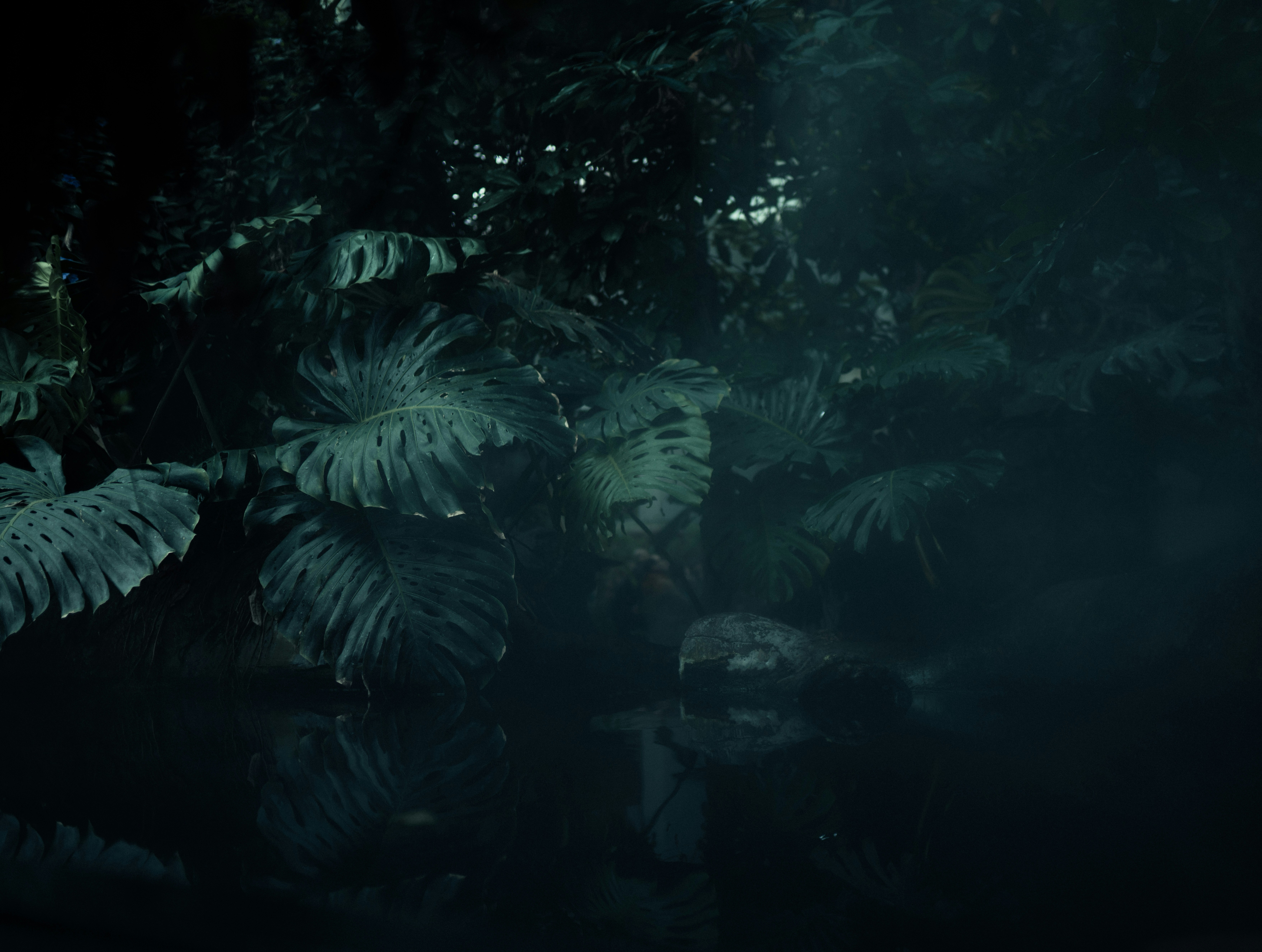
Photo by Devin Kaselnak on Unsplash
About
The title Dark Earth refers to the Portuguese term Terra preta , (literally "black soil" in Portuguese) which is a type of very dark, fertile artificial (anthropogenic) soil found in the Amazon Basin. It is also known as "Amazonian dark earth" or "Indian black earth". In Portuguese its full name is terra preta do índio or terra preta de índio ("black soil of the Indian", "Indians' black earth"). Terra mulata ("mulatto earth") is lighter or brownish in color. Terra preta owes its characteristic black color to its weathered charcoal content, and was made by adding a mixture of charcoal, bone, broken pottery, compost and manure to the low fertility Amazonian soil. A product of indigenous soil management and slash-and-char agriculture, the charcoal is stable and remains in the soil for thousands of years, binding and retaining minerals and nutrients.
Terra Preta is closely associated with the anthropological theory that posits that the vision of the Amazon forest as a pristine, uninhabited landscape, free from the influence of humanity is a myth. The Amazon as we know it today is a product of human activity, “For more than 8,000 years, people lived in the Amazon and farmed it to make it more productive. They favored certain trees over others, effectively creating crops that we now call the cocoa bean and the brazil nut, and they eventually domesticated them. And while many of the communities who managed these plants died in the Amerindian genocide 500 years ago, the effects of their work can still be observed in today’s Amazon rainforest.”
This theory made me think about our relationship with our environment, one which is becoming ever more fractious. In discussions with Mike Halerz (the video artist for the project) we agreed that one of the biggest challenges in understanding the situation in the Amazon is one of distance. We do not regularly see, experience, or interact with this environment. Humans can feel disconnected from it. The idea that from the very beginning of our species, humans have lived in close connection with this environment struck me as exactly the kind of relationship that we humans need to have with the Amazon today. We must think of all of humanity as being connected to this magnificent forest, and only then can we begin to take the necessary steps towards a better future. The music then rests on a kind of metaphor. The Amazon is represented musically not by nature sounds, or even music by indigenous cultures, but rather by more recent folk styles.
The three styles represented are those that come from the different regions in the Amazon. Capoeira music represents Brazil, Calipso del callao (the strange and delightful hybrid of Trinidad, Caribbean, and Venezuelan musical traditions) represents Southern Venezuelan, and a Chicha (a type of cumbia) hails from Peru and Colombia. Capoeira music is typically performed to accompany dancing and martial arts, and it features an indigenous instrument known as the Berimbau, the sound of which is imitated in the piece. Calipso del callao, is a musical style that comes from the Guayana region of Venezuela and combines musical elements from Trinidad, the Caribbean as well as Venezuelan instruments and styles. Chicha is an Amazonian cumbia that became popular in the 50s and 60s. These 3 styles are meant to represent the human culture that has evolved alongside the Amazon and that continues to thrive to today.
The work is built as a series of cycles that get longer and longer as a way to represent geological time passing. Each section introduces an Amazonian musical style. It is initially presented in a more direct way before it is distorted either harmonically, melodically or rhythmically. Each cycle unleashes some destruction with the final one bringing about a terrifying chaos. The destruction of these musics is meant to represent the loss not only of the environment, but of the cultures and music. After this chaos, a chorale of sorts emerges and the orchestra more or less comes together in a call to action for all of us to do our part in ensuring the future of our planet.